All products are independently selected by our editors. If you buy something via the links on our site, we may earn an affiliate commission at no extra cost to you. Learn More >
Running with your dog sounds simple. Clip on a leash, head out the door, done.
Then, about five minutes in, your dog pulls hard to one side, you overcorrect, your stride breaks, and suddenly, you’re not running anymore, you’re managing.
That’s usually the moment people realise something’s off.
In practice, we see this all the time. It’s rarely about the dog’s energy or attitude. It’s almost always the setup.
The right dog leash for running doesn’t just give you control. It smooths everything out. Your dog settles into position, the pulling softens, and the run starts to feel like something you’re actually doing together.
Let’s break down what makes that happen.
What Makes a Dog Leash Good for Running?
Running changes everything. You’ve got momentum, pace, and less time to react when your dog does something unexpected.
A regular leash can work on a walk, but once you start running, those small issues get amplified.
A hands-free leash is usually the first upgrade people notice. Wearing it around your waist frees up your arms and helps your stride feel more natural. You’re not constantly adjusting your grip or compensating for movement.
Then there’s the bungee section. This matters more than most people expect. When your dog suddenly pulls or slows down, the bungee softens that impact instead of sending it straight through your hips or lower back.
Leash length plays a role too. Too short and your dog feels restricted. Too long and you lose control, especially around turns or distractions.
And from a training perspective, pairing your leash with a proper dog harness makes a big difference. It spreads pressure across your dog’s body and gives you more consistent control, especially if your dog is still learning to run beside you.
The best leash for running really comes down to your running style and preferences.
Quick Comparison of the Best Dog Leashes for Running
If you want a quick snapshot before diving deeper, this will help you narrow things down when choosing the perfect leash for your dog.
| Leash For Dogs | Type | Key Feature | Best For | Drawback |
|---|---|---|---|---|
| Pecute Hands Free Dog Leash | Hands-free | Lightweight waist belt + adjustable length | Beginners, smaller dogs | Limited shock absorption |
| skmeditec Hands Free Leash | Hands-free | Built-in waist bag storage | Casual runs | Bulkier feel |
| Tuff Mutt Hands Free Leash | Hands-free | Bungee + dual handles | Dogs that pull | Slightly heavier |
| SparklyPets Hands Free Leash | Hands-free | Reflective stitching | Low-light runs | No storage |
| iYoShop Hands Free Leash | Hands-free | Zipper pouch + dual handles | Everyday use | Not for heavy pullers |
Best Dog Leash for Running (Detailed Reviews)
These reviews are based on confirmed product features, common user feedback patterns, and how these designs behave when you’re actually out running with your dog.
I’m confident you will find the best leash for your needs with the following recommendations.
Pecute Hands Free Bungee Leash

This is one of the easiest leashes to get started with.
On your first run, it feels light and straightforward. No bulk, no complicated setup, just clip it on and go. For a lot of dog owners, that’s exactly what they want in a dog running leash.
Where it works well is with dogs that already have some leash manners. If your dog runs fairly close and doesn’t lunge much, it feels smooth and low effort.
You’ll usually notice its limits on your second or third run if your dog pulls. That’s when the lack of a strong bungee becomes more obvious.
What I Love
- Lightweight design that feels unobtrusive while running.
- Adjustable waist belt for a comfortable fit.
- Simple, beginner-friendly setup.
- Works well for smaller or calmer dogs.
Take Note
- Limited shock absorption compared to bungee designs.
- Not ideal for dogs that pull frequently.
- Lighter materials may not hold up to heavy use.
- Less control than leashes with dual handles.
Skmeditec Hands Free Dog Leash with Waist Bag
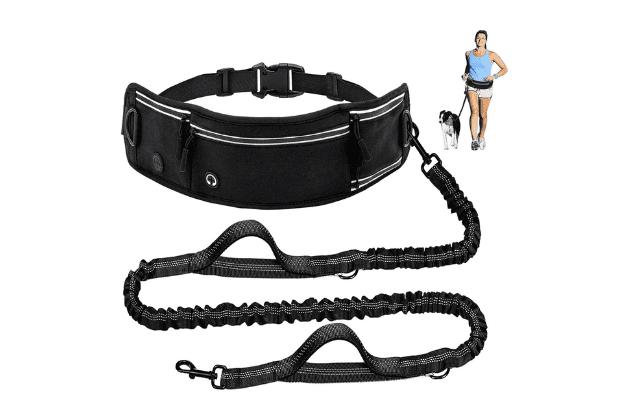
This one is built around convenience, and you notice it straight away.
Having a waist bag built into your leash sounds like a small thing, but once you’re out running, it’s genuinely useful. Phone, keys, treats, everything is in one place.
On steady, slower runs, it works well. You’re not juggling anything, and the setup feels practical.
Where it starts to show its trade-offs is when you pick up the pace. If the pouch is full, you’ll feel a bit of bounce, especially on uneven ground.
What I Love
- Built-in storage for essentials.
- Bungee section helps soften pulling.
- Adjustable waist belt for a secure fit.
- Great for casual, shorter runs.
Take Note
- Bulkier than most running leashes.
- Pouch can bounce at higher speeds.
- Less streamlined for longer runs.
- Not suited for strong pullers.
Tuff Mutt Hands Free Dog Leash

This is where things feel more controlled and stable.
The bungee is noticeably stronger than lighter options, and you feel that immediately if your dog pulls or changes direction. Instead of a sharp jolt, the movement feels more controlled.
The dual handles are also a big plus. When you pass another dog or need quick control, you don’t have to fumble. You just grab and adjust.
From a training perspective, this kind of setup often helps owners feel more confident, especially with medium to large dogs.
What I Love
- Strong bungee that absorbs pulling effectively.
- Dual handles for quick control when needed.
- Durable build for medium to large dogs.
- Helps manage dogs that pull or get distracted.
Take Note
- Slightly heavier than simpler leashes.
- Waist belt can feel firm at first.
- More than needed for smaller dogs.
- Bulkier overall setup.
SparklyPets Hands Free Dog Leash
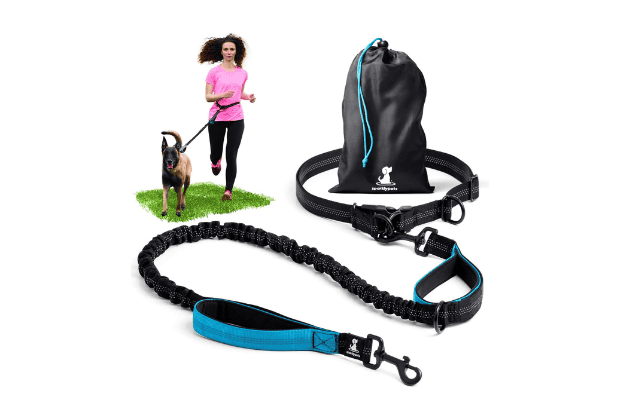
This one feels more about comfort and consistency.
If your dog already runs fairly well beside you, this leash supports that nicely. The bungee is smoother and less aggressive, which helps maintain a steady rhythm.
The reflective stitching is a small detail, but if you run early in the morning or in the evening, it’s something you’ll appreciate more over time.
What I Love
- Reflective stitching for better visibility.
- Smooth bungee supports steady running.
- Comfortable waistband for longer runs.
- Good for dogs that already run calmly.
Take Note
- Not ideal for strong pulling dogs.
- Waist fit may need adjusting initially.
- No storage features.
- Less control than dual-handle designs.
iYoShop Hands Free Dog Leash
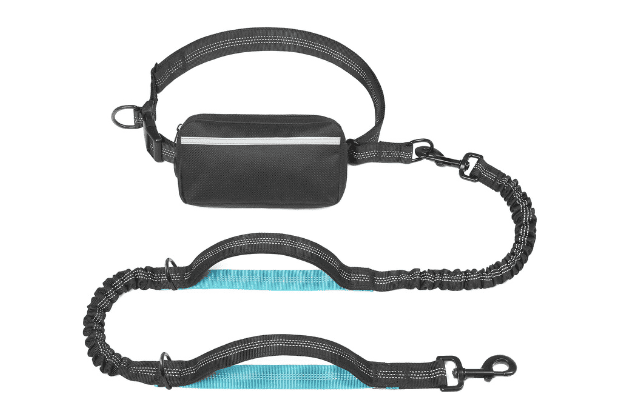
This is a more flexible, all-around option.
You’ve got a waist leash, dual handles, and a zipper pouch, so you can switch between hands-free and more controlled setups depending on the situation.
That flexibility is useful if your runs vary, especially on a trail run. Quiet route one day, busy path the next.
You’ll likely notice the extra weight slightly, especially compared to simpler leashes, but for many dog owners the added features are worth it.
What I Love
- Dual handles for flexibility and quick control.
- Zipper pouch for small essentials.
- Comfortable for moderate runs.
- Good balance of features and usability.
Take Note
- Not designed for strong pulling dogs.
- Pouch adds a bit of weight.
- Durability may vary with heavy use.
- Less suited for intense running.

Hands-Free vs Standard Dog Leash for Running
This is where most dog owners hesitate.
A hands-free dog leash is usually the better choice once your dog understands how to run alongside you. It allows a more natural rhythm and reduces the need for constant adjustments.
But early on, or in busy environments, a handheld standard leash can still be useful. It gives you quicker, more direct control if your dog suddenly changes direction or gets distracted.
In real-world use, many dog runners end up using both at different stages. They start with more control, then move to hands-free once their dog settles into a consistent pace.
Common Mistakes When Running with Your Dog
This is where most runs start to fall apart, and it usually builds over time rather than happening all at once.
Using a Retractable Leash: A retractable leash might feel convenient, but for running it creates constant unpredictability.
The length changes all the time, which makes it harder to stay balanced and in control. It also increases the risk of tangling or sudden stops mid-run.
Skipping Leash Training: If your dog pulls during a walk, running won’t fix it. It usually makes it worse.
Running adds excitement, and excited dogs tend to pull harder. Even a bit of loose leash training beforehand makes a noticeable difference.
Using the Wrong Harness Setup: Where the leash attaches matters more than most people think.
A front-clip harness can help reduce pulling, while a back-clip works better for dogs that already run calmly beside you.
Starting Too Fast or Too Far: Dogs need to build stamina gradually.
Starting with longer runs often leads to inconsistent behavior and poor habits. Shorter, steady runs tend to work much better.
Letting Your Dog Control the Run: If your dog decides when to stop, sniff, or sprint, your run never settles into a rhythm.
Over time, your dog learns they’re setting the pace, which makes running more frustrating than it needs to be.
How to Choose the Right Running Leash for Your Dog
There isn’t one best dog leash for running that works for everyone. It depends on how your dog behaves, where you run, and what you want your runs to feel like.
The goal isn’t just control. It’s consistency. You want a setup that keeps your dog close, reduces sudden pulling, and lets you settle into a rhythm without constantly adjusting.
If Your Dog Pulls
Start here if your dog tends to pull, even occasionally.
You’ll want a leash with a proper bungee section and a secondary handle. The bungee helps absorb the impact when your dog suddenly speeds up or hits the end of the leash, which takes a lot of strain off your body.
Without that, every pull transfers straight into your hips or lower back, and it adds up quickly over a run.
The handle matters just as much. When you need to bring your dog closer, crossing a road, passing another dog, or navigating a distraction, you don’t want to rely on the waist connection alone.
If your dog pulls regularly, this setup isn’t optional. It’s what makes running manageable instead of frustrating.
If You Have a Smaller Dog
With smaller dogs, the focus shifts from strength to comfort and balance.
Heavy leashes, thick waist belts, or overly stiff bungee sections can feel like too much. They can actually interfere with your dog’s natural movement, especially at a running pace.
A lighter hands-free leash usually works best here. It keeps things simple and allows your dog to move more freely without feeling restricted.
You’ll also notice that smaller dogs tend to be more sensitive to tension changes. A softer, less aggressive bungee or even a non-bungee setup can sometimes feel more natural for them.
If You Have a Medium to Large Dog
This is where build quality really starts to matter.
With more strength and momentum behind them, medium to large dogs put more stress on the leash, especially when they change direction or pick up speed.
You’ll want something with reinforced stitching, solid clips, and a bungee that can handle repeated tension without overstretching.
This is also where a stable waist belt becomes important. If the belt shifts or twists under load, you’ll feel it immediately, and it throws off your balance.
A well-built leash here doesn’t just last longer. It makes the entire run feel more controlled and predictable.
Where You Run Matters
Your environment plays a bigger role than most people expect.
If you’re running on quiet roads or open paths, you can prioritize comfort and flow. A hands-free leash with a bit more length works well because your dog has space to settle into a steady pace.
But if you’re running on trails, near traffic, or in busy parks, control becomes more important.
In those situations, you’ll benefit from a shorter effective leash length and the ability to quickly bring your dog closer. Features like dual handles or adjustable sections start to matter a lot more.
It’s not just about the leash itself, it’s about how quickly you can react when something changes.
Match the Leash to Your Running Style
This is the part most people overlook.
Think about how you actually run, not how you think you should run.
If your runs are steady and consistent, a hands-free leash will feel natural. Once your dog settles into position, you’ll barely think about it.
But if your runs include stops, changes in pace, or unpredictable surroundings, you’ll want something with more flexibility. A leash with handles or adjustable control points gives you options when things don’t go to plan.
When you get the right match, it’s obvious. You’re not adjusting the leash, correcting your dog, or breaking stride every few minutes.
Everything just flows.
Do You Need a Harness for Running with Dogs?
In most cases, yes, and it’s one of the easiest upgrades you can make.
A collar puts pressure directly on your dog’s neck. When you’re running, that pressure increases, especially if your dog pulls, slows down suddenly, or gets distracted.
Over time, that can lead to discomfort and, in some cases, injury.
A dog harness spreads that pressure across the chest and shoulders instead. It allows your dog to move more naturally while keeping things safer and more controlled with a leash for running with dogs.
It also gives you more consistent feedback through the leash. Instead of sharp, sudden tension, the movement feels more even and predictable.
From a training perspective, the attachment point matters too.
A front-clip harness can help reduce pulling by gently redirecting your dog’s movement, which is useful if you’re still working on leash manners.
A back-clip harness works better for dogs that already run calmly beside you and don’t need as much correction.
If you’re planning to run regularly with your dog, a good harness isn’t just helpful, it’s part of the setup that makes everything else work properly.
Final Thoughts
You don’t need the perfect setup. You just need the right one for your dog.
If I had to guide most dog owners based on what we see in real-world use, I’d keep it simple.
If your dog pulls or you want the most control, something like the Tuff Mutt is usually the safest bet. It gives you that extra stability when things get unpredictable.
If you’re just starting out or running with a smaller, calmer dog, the Pecute is an easy way to get going without overcomplicating things.
And if your dog already runs nicely beside you and you just want something comfortable and reliable, the SparklyPets tends to feel the most natural over time.
Start there, see how your dog responds, and adjust as needed.
When it clicks, you’ll know. The leash relaxes, your dog settles in, and the run finally feels like a run again.