All products are independently selected by our editors. If you buy something via the links on our site, we may earn an affiliate commission at no extra cost to you. Learn More >
Finding the best harness for small dogs sounds straightforward until you’re standing in front of a wall of options and your Chihuahua is already trying to eat the shopping bag.
Small dogs have genuinely different needs from larger breeds, and the harness that works brilliantly on a Labrador can cause real problems on a Yorkie.
Here’s what you actually need to know, plus the six small dog harnesses worth your time this year.
Why the Right Harness Matters More for Small Dogs
Small breeds carry real health risks that make a well-fitted harness more than just a comfort choice.
Many small and toy breeds, including Yorkies, Chihuahuas, and Pomeranians, are prone to tracheal collapse. It’s a condition where the cartilage rings supporting the windpipe weaken over time, and repeated pressure on the neck from a collar or a poorly fitted harness can make it worse.
A good harness shifts that pressure away from the throat and across the chest and shoulders, which is a far safer place for it to go.
There’s also the escape issue. Small dogs, particularly narrow-headed breeds like Miniature Dachshunds and small Whippet crosses, can back out of a loose-fitting harness in seconds.
I’ve seen it happen mid-walk on a busy road. Choosing the right design and the perfect fit with secure adjustment points reduces that risk significantly.
The Best Dog Harnesses for Small Dogs We Reviewed
These are the best dog harnesses of 2026 that I’d recommend to small dog owners, based on genuine research and real-world experience.
Each one has been assessed for fit, build quality, ease of use, and suitability for small and extra small dogs specifically.
| Harness | Best For | Clip Type | Price Range |
|---|---|---|---|
| Ruffwear Front Range | Active, compact small breeds | Front + Back | $$$ |
| Kurgo Journey Air | Outdoor adventures and hiking | Front + Back | $$ |
| Embark Adventure No Pull | Training and everyday use | Front + Back | $$ |
| PUPTECK Adjustable Set | Budget-friendly, casual walks | Back | $ |
| Comfort Fit Dog Harness | Very small dogs, comfort-focused | Back | $ |
| Voyager Step-in Air | Dogs who dislike overhead harnesses | Back | $ |
Ruffwear Front Range Dog Harness
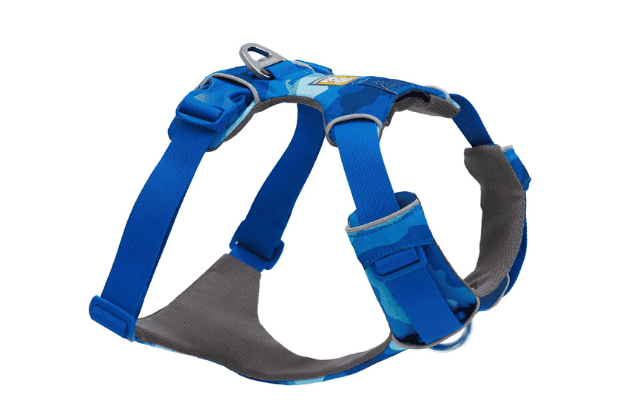
One of the first things I tell clients who are working on loose-leash walking with a small breed is that the harness needs to stay in position when the leash goes taut.
A lot of cheaper options rotate or ride up the moment there’s any tension, which makes front-clip training almost useless.
The Ruffwear Front Range doesn’t do that. The four-point adjustment system lets you get a genuinely snug, stable fit, and the padded chest plate sits consistently in the right place even on dogs who lunge or surge forward unpredictably.
It works especially well on compact, boxy dogs. Boston Terriers, Pugs, and stocky terrier types fill the chest panel properly, which is what keeps everything aligned.
On longer-bodied dogs, it tends to sit too short in the back, and I’ve seen it cause some armpit rubbing as a result. Worth knowing before you buy.
The front clip is also worth addressing honestly. It redirects rather than stops pulling, and it works best alongside actual training, not instead of it.
That said, for a small dog who pulls into the collar and you’re worried about their throat, the front clip here gives you a safer option while you work on the behaviour.
Best for compact, square-bodied small breeds who are being worked on loose-leash manners and need a harness that holds its position when things get interesting.
What I Love
- Stays in position when the leash goes taut, making it genuinely useful for training.
- Four adjustment points deliver a close, stable fit on non-standard small dog body shapes.
- Padded chest and belly straps distribute pressure well across a small dog’s frame.
- Reflective trim and built-in ID pocket are practical, well-thought-out details.
Take Note
- Over-the-head fit doesn’t suit anxious or head-shy dogs.
- Runs short across the back on longer-bodied breeds, which can cause armpit rubbing.
- Price sits at the top of this list, less ideal if your dog is still growing.
Kurgo Journey Air Dog Harness
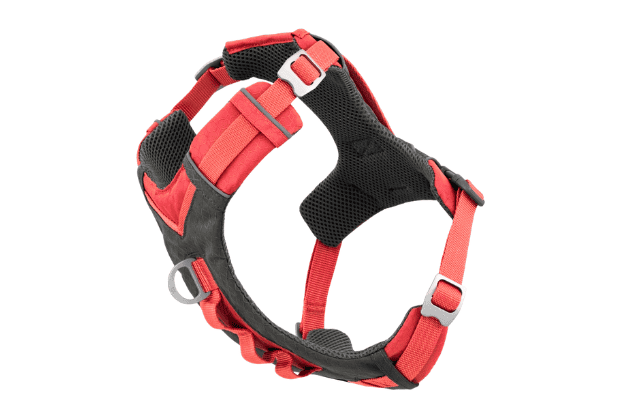
What stands out to me about the Kurgo Journey Air, particularly for active small dogs, is the deep V-neck. Most budget harnesses use a straight chest strap that cuts across the front of the dog’s shoulders.
That restricts extension, and over time it can affect how a dog moves, especially one that runs or hikes regularly.
The V-neck on this harness sits lower on the chest and keeps the shoulders completely free, which you can actually see in how dogs carry themselves when wearing it. They move naturally rather than compensating.
The back handle is something I find genuinely useful in training contexts, not just on trails. If you have a small reactive dog who sometimes needs to be physically managed around triggers, being able to get a hand on the harness quickly gives you a calm, controlled point of contact rather than grabbing at a collar or leash in a panic.
One honest issue worth raising is that the adjustment straps can creep loose during high-energy activity. If your dog is playing off-leash or doing any kind of fast running, check the fit when you clip the leash back on.
It’s not a dealbreaker, but it’s the kind of thing that matters if you’re on a trail and need to trust the harness.
Best for active small dogs who hike or run with their owners, particularly breeds that need full freedom of shoulder movement to move comfortably at speed.
What I Love
- Deep V-neck keeps shoulders completely free, which you can see in how dogs move wearing it.
- Lightweight ripstop and breathable mesh perform well in warmer conditions.
- Back handle gives you a calm, controlled point of contact with reactive or unpredictable small dogs.
- Lifetime warranty and rust-free aluminium hardware make it a solid long-term investment.
Take Note
- Adjustment straps can creep loose during fast or rough off-leash activity.
- Decorative front loops serve no purpose and present a minor misuse risk.
- Buckle durability has been flagged by some owners using it heavily every day over time.
Embark Adventure No Pull Dog Harness
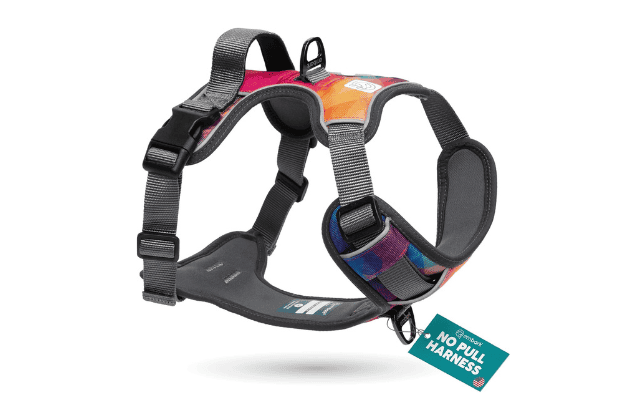
The gel-lined handle on the Embark Adventure is something I wasn’t sure about until I started recommending it to clients with dogs who need to be managed in busy environments.
For a small dog who can be reactive around other dogs or people, having a comfortable grip point on the harness means you can hold them steady without it feeling like a grab.
That matters both for the dog’s stress level and for the owner’s confidence. A handler who feels in control tends to stay calmer, and that has a direct effect on how the dog behaves.
The military-grade nylon is stiff when the harness is new, and a few dogs do take a day or two to move normally in it. That’s worth knowing so you don’t panic and assume the sizing is wrong. Give it a few short sessions indoors before the first proper walk, and most dogs settle into it quickly.
I want to be straightforward about the no-pull claim. The front clip helps redirect a dog that’s pulling, but a small dog that is genuinely committed to pulling can rotate this harness out of position, which means the front ring is no longer centred on the chest where it needs to be.
It works best for moderate pullers and dogs who are in the process of learning, not for dogs who are pulling hard with no training foundation yet.
Best for small dogs who are learning to walk on a loose leash and owners who walk in lower-light conditions and want strong all-around visibility.
What I Love
- Military-grade nylon construction is noticeably more durable than most at this price point.
- Gel-lined handle is comfortable for owners who need to hold or steady their dog in busy situations.
- 360-degree reflective trim is more extensive than most competitors in this bracket.
- Four adjustment points accommodate a range of small dog body shapes.
Take Note
- Can rotate out of position on committed pullers, reducing front clip effectiveness.
- Nylon stiffness takes a few sessions to soften, which some dogs find off-putting initially.
- Not machine washable, a real inconvenience for a harness built for outdoor use.
PUPTECK Adjustable Dog Harness Collar and Leash Set
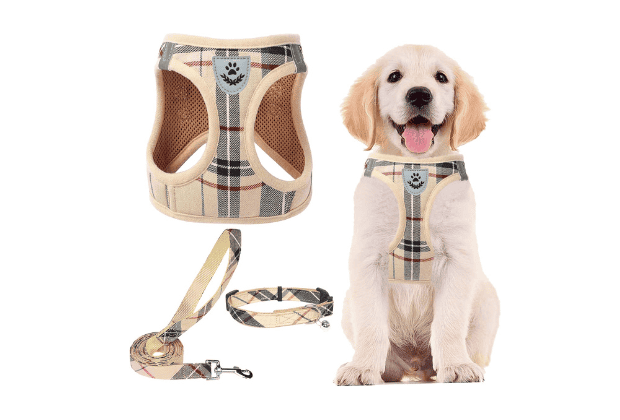
The dogs I’d reach for this harness for first are the ones who’ve had a rough start with gear. Rescue dogs who react badly to things being put on them, newly adopted small dogs who don’t yet trust handling, puppies who’ve never worn a harness before.
The step-in design removes a lot of the stress that comes from pulling a harness over a dog’s head, and for a dog that’s already anxious, that small change in routine makes a real difference to how quickly they accept wearing it.
The complete set is also practical in a way that’s easy to underestimate. When someone brings home a small dog for the first time, they often don’t have the right size of anything yet.
Having a harness, collar, and leash that are matched and ready to go reduces the overwhelm of those first few days.
What I’d be honest about is that this isn’t a harness for a dog with behaviour challenges around walking.
There’s limited adjustability compared to the higher-end options, and for a small dog who pulls confidently or who has learned to escape harnesses, it won’t give you enough security or control.
Think of it as a starter harness or a casual walking harness, not a training tool.
Best for newly adopted small dogs, sensitive rescues, or puppies being introduced to a harness for the first time.
What I Love
- Step-in design removes the stress of overhead fitting for anxious or sensitive dogs.
- Complete set gives new owners a matched harness, collar, and leash from day one.
- Double D-rings and quick-release buckle provide solid security for calm daily walks.
- Soft mesh padding is comfortable enough for all-day wear on small, sensitive skin.
Take Note
- Limited adjustability means in-between sizes can be a problem, and sizing runs small.
- Not suitable for confident pullers or dogs with a history of escaping harnesses.
- Durability doesn’t match the premium options on this list.
Comfort Fit Dog Harness No Pull
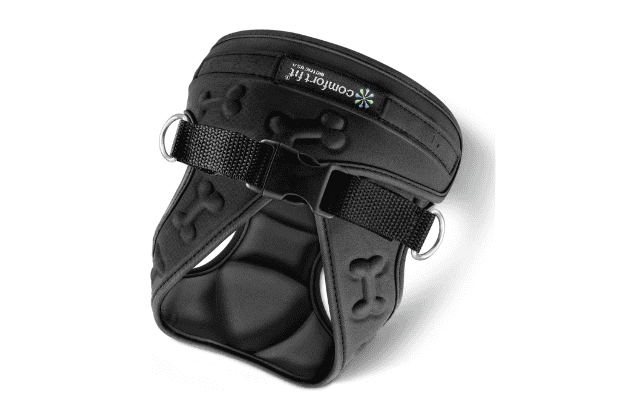
When a client has a very small, older, or particularly delicate dog, this is often the harness I point them toward first.
The padded interior is noticeably softer than most options in this price range, and for a dog who’s spending the better part of an hour in a harness every day, that difference in material feels meaningful when you handle it.
It also means most dogs accept it without much protest, which matters when you’re trying to build a positive association with wearing gear.
The step-in design keeps the whole process calm and uncomplicated. For an older small dog who might be stiff or sore and doesn’t want to lift their legs high, the low-profile entry makes harness time less of a production.
Where it falls short is with anything beyond a gentle, relaxed walk.
The Velcro can attract hair and debris surprisingly fast, and on a dog who moves energetically or tests the harness with any real force, the closure can work loose. This is comfort walking gear, not training gear, and it performs best when it’s used as exactly that.
Best for calm, older, or very small dogs who need a soft, easy-wearing harness for gentle daily walks with no training agenda attached.
What I Love
- Noticeably soft padded interior is gentle on delicate or older small dogs.
- Step-in design is easy on stiff or arthritic dogs who struggle lifting their legs.
- Lightweight enough for daily wear without adding noticeable weight to a tiny dog.
- Dual D-rings add a useful layer of leash security at this price point.
Take Note
- Velcro closure attracts hair and debris quickly and needs regular cleaning.
- Not suitable for dogs who pull or who have learned to back out of harnesses.
- No front clip means no mechanical option for addressing pulling behaviour.
Best Pet Supplies Voyager Step-in Air Harness
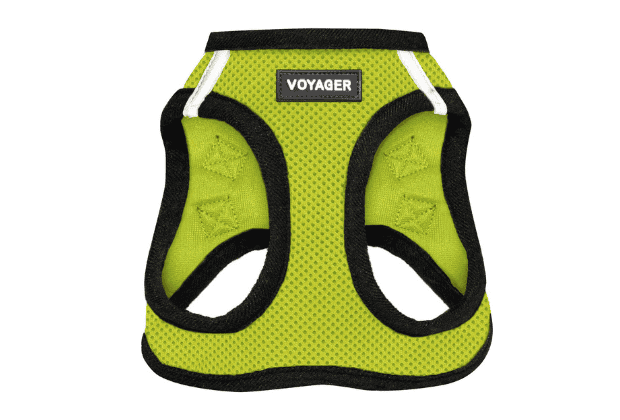
The reason I keep coming back to the Voyager Step-in Air when clients describe the harness-fitting struggle is simple. The harness owners actually use consistently is always going to be more effective than the better harness gathering dust in a drawer.
I’ve worked with clients who had a perfectly good over-the-head harness that their dog resisted so strongly every morning that they started leaving it off.
A dog walking on a collar because the harness is too stressful to put on is worse than a dog in an easier harness every single day without complaint.
The step-in design genuinely removes that friction. Your dog places their front feet through the loops, you clip it across the back, and you’re done in a few seconds. For a wriggly, impatient small dog, that matters more than people expect.
The triple security system, hook-and-loop fastener, buckle, and double D-rings also makes this more escape-resistant than most step-in designs at this price.
That said, if you have a narrow-headed breed, check the neck fit carefully. Dogs with slim heads relative to their bodies can sometimes back out of step-in harnesses if the neck opening isn’t snug enough.
The main limitation is that there’s no front clip, so if pulling is your main issue, this harness won’t give you the tools to address it. Pair it with consistent training, or look at a dual-clip option if redirecting is part of what you need.
Best for small dogs who resist or panic during overhead harness fitting, and owners who want a daily walking harness that goes on quickly, stays on securely, and doesn’t create a battle before every walk.
What I Love
- Step-in design removes daily harness friction, so owners use it consistently.
- Breathable air mesh keeps small dogs comfortable across seasons.
- Triple security with hook-and-loop, buckle, and double D-rings is more secure than most step-in designs at this price.
- Wide range of sizes and colours covers a broad spread of small and toy breeds.
Take Note
- No front clip, so it won’t help with pulling without active training alongside it.
- Narrow-headed breeds need careful sizing to prevent backing out through the neck opening.
- Hook-and-loop closure collects hair and lint with regular use.
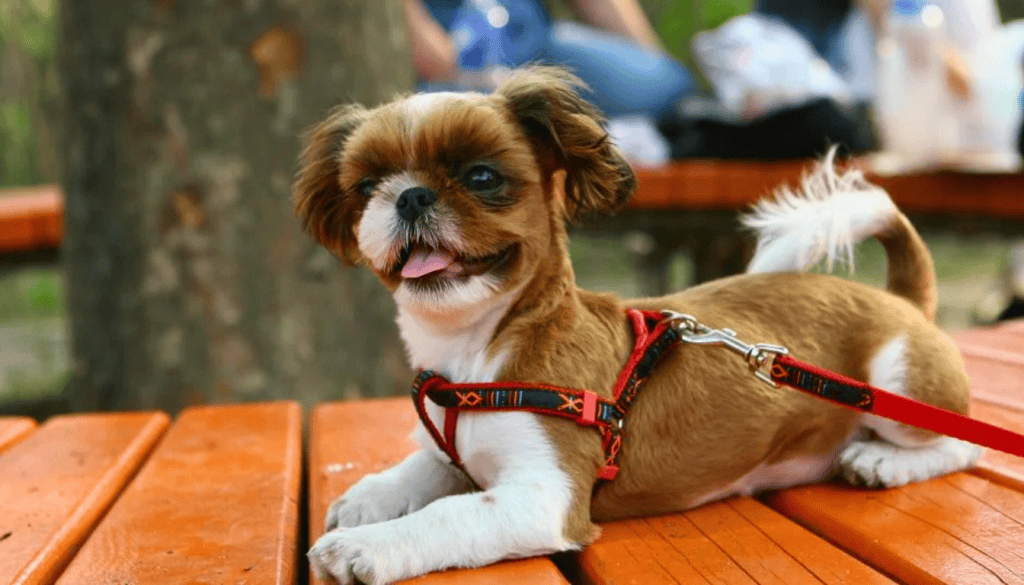
Types of Harnesses and Which Small Dogs They Suit
Not every harness style works for every small dog, and matching the style to your dog’s body and behaviour saves a lot of frustration.
Back-clip harnesses attach the leash to a D-ring on the dog’s back. They’re comfortable, easy to use, and a good choice for dogs who already walk politely.
If your dog doesn’t pull and you just want something simple and secure, a back-clip design is the place to start.
Front-clip harnesses attach the leash at the chest. When a dog pulls forward, the clip redirects them back toward you. These are often labelled as no-pull harnesses, but it’s worth being clear about what that actually means.
The harness redirects. It doesn’t train. You still need to work on the walking behaviour alongside it.
Step-in harnesses are exactly what they sound like. Your dog steps both front legs through two loops, and you clip the harness across the back.
These are a good call for dogs who panic when anything goes over their head. If putting a harness on feels like a daily battle, a step-in design can solve it immediately.
Vest-style harnesses offer broader coverage across the chest and body.
They work particularly well for brachycephalic breeds like French Bulldogs and Pugs, whose wide, deep chests and short necks can make Y-shaped harnesses awkward to fit.
How to Measure Your Dog for a Harness
Getting the fit right is the step most owners skip, and it’s the one that matters most.
The measurement you need is chest girth. Take a soft tape measure and wrap it around the widest part of your dog’s rib cage, just behind the front legs. Not the neck and not the waist. The chest. That single number will do more to get you to the right size than anything else.
Once the harness is on, the two-finger rule tells you whether the fit is correct. Slide two fingers under any strap. If they slide in with a little resistance but the harness doesn’t sag, rotate, or bunch up, you’re in the right place. If your whole hand fits underneath, size down.
Sizing also varies a lot between brands.
A small from one manufacturer may be a medium from another. Always check the actual chest measurement range on the sizing chart before you buy, not just the size label.
For longer-bodied breeds like Dachshunds, it’s worth checking the back length of the harness as well as the chest measurement.
For narrow-headed breeds, look for neck adjustment so the harness can be fitted snugly without restricting breathing. For brachycephalic dogs, a wider chest panel with a deep V-neck gives their broader front the clearance it needs.
What to Look For When Choosing a Harness for Small Dogs
Once you know your dog’s chest measurement, a few key features will separate a harness that works well from one that just looks good in the photo.
Padding placement matters most at the chest and belly straps, which is where the harness makes the most contact with your dog’s body. Thin, unpadded straps can cause chafing on small, sensitive skin within a single walk.
Leash attachment points are worth thinking through before you buy. A back clip suits polite walkers. A front clip helps redirect dogs who pull.
If you’re not sure which your dog needs yet, a dual-clip harness gives you both options and lets you figure it out as you go.
The number of adjustment points tells you how much you can tailor the fit. Four is a solid baseline. More is better, particularly if your dog has a non-standard shape, like a Dachshund’s long back or a French Bulldog’s deep chest.
Reflective trim is easy to overlook until you’re walking at 6am in January. Most harnesses on this list include it, but the amount and placement varies. Trim on both sides, not just the top, gives better all-around visibility for your dog.
Finally, think about how many times a day the harness goes on and comes off. If the answer is two or more, ease of use becomes a real priority, not just a nice-to-have.
Final Thoughts
The best harness for small dogs is always the one that fits your specific dog well, stays put during walks, and doesn’t cause any rubbing or restriction.
Measure the chest first, match the harness style to your dog’s body shape and personality, and take a little time to introduce it at home before the first walk. A few short sessions with the harness on indoors, paired with calm praise and the occasional treat, will build a positive association that makes every walk easier from day one.
If your dog is compact and square-bodied and relaxed about gear, the Ruffwear Front Range is hard to beat for quality and versatility. If they can’t stand anything over their head, the Voyager Step-in Air makes daily walks genuinely simple.
And if you’re actively working on loose-leash walking, a dual-clip option like the Kurgo Journey Air gives you the tools to make real progress.