All products are independently selected by our editors. If you buy something via the links on our site, we may earn an affiliate commission at no extra cost to you. Learn More >
Have you ever noticed your furry friend yawning while you’re petting them? I’ve seen this behavior countless times. It’s a curious sight that often leaves pet owners wondering, “Why does my dog yawn when I pet them?”
The answer isn’t as simple as you might think.
In this post, I’ll unravel the mystery behind this common canine behavior and help you understand what your dog might be trying to tell you.
Get ready to become a pro at decoding your pup’s secret language!
First, Understanding Dog Body Language
Before we get ahead of ourselves, let’s zoom out and look at the bigger picture. Dog body language is like a secret code, and yawning is just one piece of the puzzle.
Common canine signals
Dogs are chatterboxes, but not in the way you might think. They’re constantly communicating with us through their body language.
Here are some key signals to watch for:
- Tail position: A wagging tail doesn’t always mean a happy dog. The height and speed of the wag can tell you a lot about your dog’s mood.
- Ear position: Perked up ears usually indicate alertness, while flattened ears might signal fear or submission.
- Eye contact: Direct eye contact can be a challenge in dog language, while soft eyes or looking away can be a sign of friendliness or submission.
- Mouth and lip movements: A relaxed, slightly open mouth often indicates a content dog, while tight lips or showing teeth can be a warning sign of stress.
Remember, it’s not just about individual signals, but how they all work together. It’s like reading a sentence – you need all the words to get the full meaning.
The Importance of Context in Interpreting Dog Behavior
Here’s the tricky part: context is everything when it comes to dog body language. A wagging tail might mean one thing at the dog park and something entirely different at the vet’s office.
For example, I once had a client whose dog would yawn every time they put on their running shoes. They thought the dog was bored, but in reality, the yawn was a sign of excitement!
The dog had learned that shoes meant a run was coming.
This is why it’s crucial to look at the whole picture when trying to understand your dog’s behavior.
What’s happening in the environment?
What just happened?
What’s about to happen?
All these factors can influence your dog’s body language.
As we move into the next section about why dogs yawn when petted, keep in mind that yawning is just one part of your dog’s communication toolkit.
It’s all about putting the pieces together to understand what your furry friend is really saying. Observing signs like yawning is one way to gauge their mood.
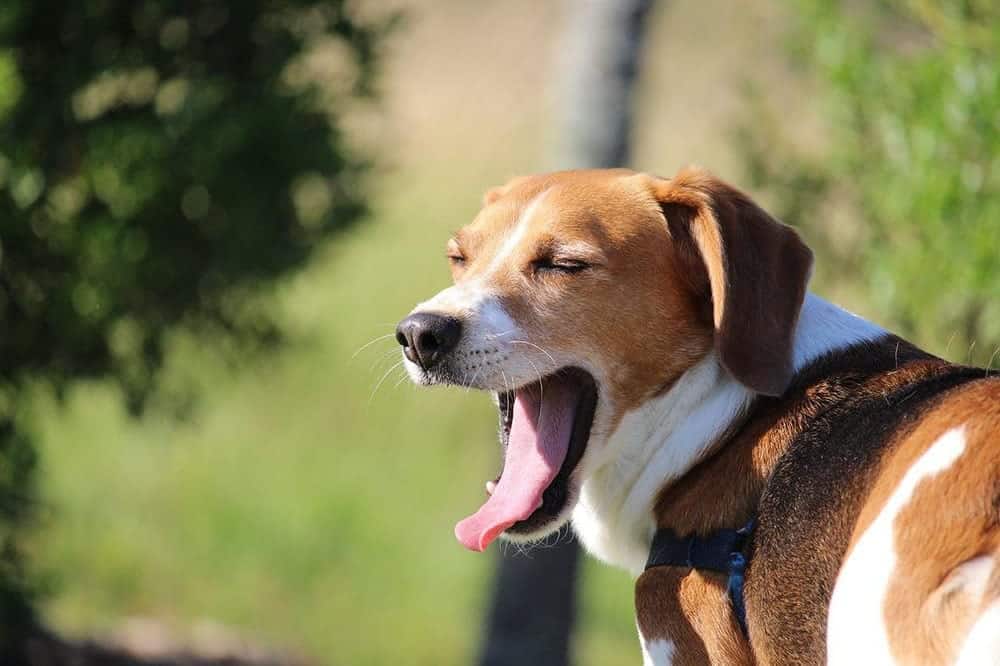
Reasons Why Your Dog May Yawn When Petted
When your furry friend yawns during a petting session, it’s not always a sign of boredom. In fact, there are several reasons why dogs might yawn when being petted.
Let’s dive into these fascinating canine behaviors and what they might mean.
1. Stress or Anxiety
Believe it or not, your dog is yawning can be a sign that your dog is feeling stressed or anxious. It’s one of the many calming signals dogs use to communicate their discomfort.
When a dog is feeling overwhelmed, they might yawn as a way to self-soothe or to signal to others (including you) that they’re feeling uneasy.
It’s like their way of taking a deep breath to calm down.
2. Overwhelm or Overstimulation
Sometimes, even good things can be too much. Your dog might yawn when petted if they’re feeling overwhelmed by the stimulation.
This doesn’t necessarily mean they don’t enjoy the attention, but rather that they might need a break.
Think of it like being at a loud concert. You’re having fun, but after a while, you might need to step outside for a breather.
For dogs, a quiet place can help them reset if they’re feeling overstimulated.
3. Calming Signal
Dogs are masters of non-verbal communication, and yawning can be a powerful calming signal. When used in this context, a yawn is your dog’s way of saying, “Everything’s cool, let’s all relax.”
Interestingly, dogs might use this signal not just for themselves, but also to calm you down if they sense you’re tense or excited.
It’s a fascinating aspect of dog training and communication that showcases how in tune our canine companions are with our emotions.
4. Contentment and Relaxation
On a more positive note, yawning can also be a sign of contentment and relaxation.
Just as we might yawn when we’re settling into a comfy bed, dogs might yawn when they’re feeling safe and at ease during a petting session.
This type of yawn is often accompanied by other relaxed body language, like soft eyes or a loose, wagging tail. It’s your dog’s way of saying, “This is nice, I’m enjoying this.”
5. Empathy and Emotional Contagion
Here’s a mind-blowing fact: dogs can “catch” yawns from humans, a phenomenon known as emotional contagion.
This is believed to be linked to empathy, showing how deeply connected dogs are to human emotions.
So, if you yawn while petting your dog, don’t be surprised if they yawn back. It’s not that you’re boring them – they’re showing their emotional bond with you!
Understanding these reasons can help you better interpret your dog’s behavior and strengthen your human-canine bond.
Remember, every dog is unique, so always consider the context and your individual pet’s personality when decoding their yawns.
Differentiating Between Normal and Excessive Yawning in Dogs

Now that we’ve explored the various reasons why dogs might yawn when petted, let’s tackle another important question: How can you tell the difference between normal yawning and excessive yawning that might indicate a problem?
Don’t worry, I’ve got you covered!
Signs of Normal Yawning
First things first, let’s talk about what’s considered normal when it comes to dog yawns. Just like us humans, dogs yawn as part of their natural behavior.
It’s as normal for them as wagging their tails or giving you those irresistible puppy eyes when they want a treat.
Normal yawning in dogs usually happens:
- When they’re tired or getting ready for a nap
- After waking up from a snooze
- During periods of calm or relaxation
- As a response to seeing someone else yawn (yes, even dogs can “catch” yawns!)
- Occasionally during petting or play sessions
These yawns are typically infrequent and don’t disrupt your dog’s daily activities. They’re just part of your furry friend’s regular repertoire of behaviors, like a doggy version of stretching or sighing.
When to Be Concerned About Excessive Dog Yawning
Now, let’s flip the coin and look at when yawning might be a cause for concern.
Excessive yawning is like a red flag waving in your face – it’s your dog’s way of saying, “Hey, something’s not quite right here!”
You should be on alert if you notice:
- Frequent yawning that seems out of context (like during activities your dog usually enjoys)
- Yawning accompanied by other signs of distress (panting, pacing, whining)
- Sudden increase in yawning frequency without any apparent reason
- Yawning that disrupts your dog’s normal activities or sleep patterns
If you’re seeing these signs, it’s time to put on your detective hat and do some investigating.
Could there be changes in your dog’s environment causing stress, or is there another dog affecting its comfort?
Have there been any alterations to their routine?
Are they showing any other unusual behaviors?
Sometimes, excessive yawning can be a symptom of an underlying health issue. It could be anything from dental problems to cognitive dysfunction in older dogs.
In rare cases, it might even be a sign of a neurological issue.
Remember, you know your dog best. If your gut is telling you something’s off, it probably is. Don’t hesitate to reach out to your veterinarian.
They’re the experts in veterinary medicine and can help determine if your dog’s yawning is just a quirky habit or a sign of something that needs attention.
In my years as a dog trainer, I’ve seen cases where excessive yawning was the first clue that led to diagnosing issues like anxiety disorders or even early stages of canine cognitive dysfunction.
It’s always better to err on the side of caution when it comes to your furry friend’s health.
So, keep an eye on those yawns, but don’t let it drive you barking mad! Most of the time, it’s just your dog being a dog. But if something seems off, trust your instincts and consult with a pro.
After all, a healthy dog is a happy dog, and that’s what we all want for our four-legged companions!
Wrapping Up
So, why does your dog yawn when you pet them? As we’ve seen, it’s not always a sign of boredom. Your furry friend might be feeling stressed, overwhelmed, or even just super relaxed.
Remember, yawning is part of a dog’s language, and it’s up to us to learn what they’re trying to say. Yawning is one way for dogs to communicate their feelings.
Keep an eye on your pup’s yawning habits. If it seems excessive or comes with other unusual behaviors, it might be time for a chat with your vet.
But most of the time, a yawn during petting is just your dog’s way of communicating or settling into a cozy moment with you.
Understanding your dog’s yawns can help strengthen your bond and ensure your furry friend is happy and healthy. So next time your dog yawns while you’re petting them, you’ll have a better idea of what’s going through their canine mind!